Why Heat Stress Is a Serious Threat to Winnipeg Trees
Trevor Soltys & Paul Kasper
🔥 Winnipeg summers can swing from pleasant to punishing in a matter of days. When temperatures spike, your trees feel it long before you do — and the damage can be long‑lasting. Heat stress weakens a tree’s natural defenses, making it more vulnerable to pests, disease, and structural failure.
Knowing the early warning signs can save your trees — and prevent costly property damage.
🌡️ 1. Wilting or Drooping Leaves
When a tree can’t move enough water to its canopy, leaves begin to sag.
What to look for:
- Leaves that look limp or tired
- Foliage that curls inward
- Branch tips that droop during the hottest part of the day
Why it matters: This is often the first sign your tree is struggling.
🍂 2. Scorched or Browning Leaf Edges
Heat‑stressed leaves often develop crispy, brown margins.
Common causes:
- Intense sun exposure
- Hot, dry winds
- Insufficient soil moisture
If the browning spreads inward, the tree is in active decline.
🌳 3. Premature Leaf Drop
Trees shed leaves early as a survival tactic.
If you notice:
- Leaves falling in July or August
- Bare patches forming in the canopy
- A sudden “thinning” look
…it’s a red flag that the tree is conserving energy.
🪵 4. Cracked or Splitting Bark
Heat can cause the trunk to expand and contract rapidly, leading to bark damage.
Warning signs:
- Vertical cracks
- Peeling or loose bark
- Exposed wood beneath the surface
Cracks create an entry point for pests and disease.
💧 5. Slow Growth or Small, Pale Leaves
Heat stress often shows up as stunted growth.
Indicators:
- New leaves are smaller than usual
- Foliage looks pale or washed out
- Branch tips stop extending
This means the tree is redirecting energy to survival instead of growth.
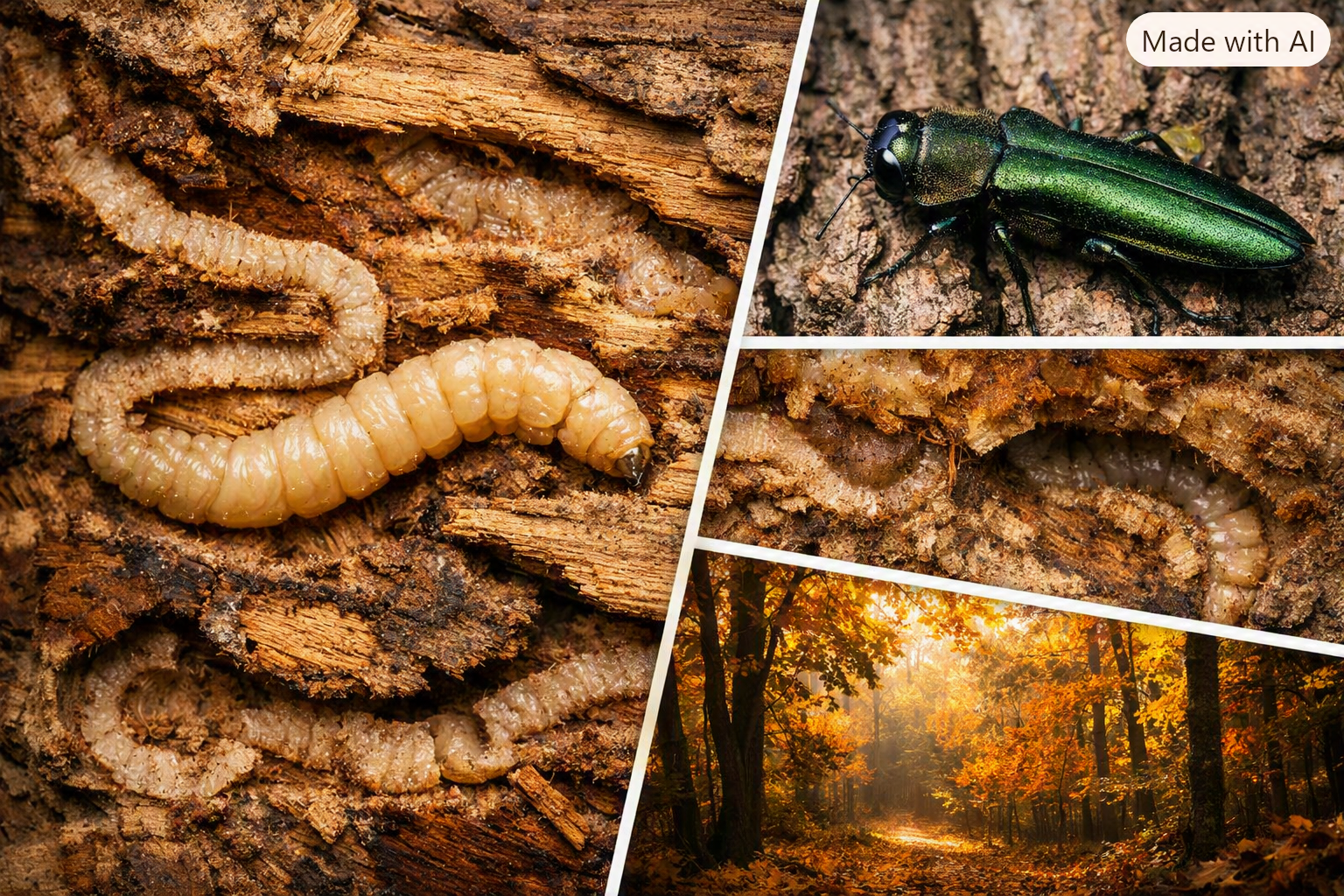
🐛 6. Increased Pest Activity
Heat‑weakened trees attract insects like magnets.
Watch for:
- Borer holes
- Sawdust‑like frass
- Sticky honeydew
- Ant trails
Pests often attack after heat stress has already weakened the tree.
🌱 How to Help a Heat‑Stressed Tree Recover
1. Deep Watering
Water slowly and deeply at the dripline — not at the trunk.
2. Mulch Correctly
A 2–3 inch layer helps retain moisture.
Avoid “volcano mulching.”
3. Shade Young Trees
Temporary shade cloth can prevent leaf scorch.
4. Prune Strategically
Remove dead or damaged branches to reduce stress.
5. Schedule a Professional Assessment
Heat stress can mimic other issues — a certified arborist can diagnose the root cause.
🌲 When to Call TreeSolve
If your tree shows multiple symptoms or declines rapidly, it’s time for a professional evaluation. Heat‑stressed trees can become hazardous without warning.
TreeSolve provides:
- Tree health assessments
- Corrective pruning
- Soil and moisture management
- Emergency care for declining trees
Protect your trees before the damage becomes irreversible.
👉 Contact us: https://www.treesolve.ca/contact-us
👉 Tree Removal: https://www.treesolve.ca/services/tree-removal
👉 Stump Grinding: https://www.treesolve.ca/services/stump-grinding
👉 Pruning: https://www.treesolve.ca/services/pruning
👉 Tree Cabling: https://www.treesolve.ca/services/tree-cabling
👉 EAB Injections: https://www.treesolve.ca/services/emerald-ash-borer-injections