Pre-Winter Hazardous Tree Assessment: The Silent Signs of Structural Decay
Trevor Soltys & Paul Kasper
ISA‑Certified Arborists Serving Winnipeg & Surrounding Communities
https://treesolve.ca
As winter approaches in Winnipeg and surrounding communities, trees face some of the toughest conditions of the year. Heavy snow accumulation, ice loading, strong winds, and rapid temperature fluctuations can turn an already weakened tree into a serious safety hazard. Understanding the silent warning signs of structural decay before winter arrives can help homeowners avoid costly property damage, injuries, and emergency tree removals.
At TreeSolve Inc., our ISA-Certified Arborists regularly assess trees throughout Winnipeg, Charleswood, River Heights, Tuxedo, Whyte Ridge, Linden Woods, Fort Richmond, Southdale, Island Lakes, Transcona, North Kildonan, East Kildonan, West Kildonan, East St. Paul, West St. Paul, Headingley, Oak Bluff, and La Salle. Many hazardous trees show subtle signs of decay long before failure occurs.
Why Winter Increases Tree Failure Risk
During the growing season, leaves and healthy wood help distribute weight and withstand environmental stress. When winter arrives, snow and ice can add significant loads to structurally compromised trees. Hidden decay that seemed harmless in summer may suddenly result in:
• Broken limbs
• Split trunks
• Uprooted trees
• Damaged roofs, vehicles, and fences
• Blocked driveways and walkways
• Safety risks to family members and pedestrians
A professional pre-winter assessment can identify these risks before they become emergencies.
🌳 Trunk Cracks: Nature's Warning Signal
Trunk cracks are among the most concerning indicators of structural weakness.
Cracks may develop from:
• Previous storm damage
• Rapid temperature fluctuations
• Frost cracking
• Mechanical injury
• Internal wood decay
Not all cracks are immediately dangerous, but deep vertical cracks can indicate that internal wood fibers have separated. Under the added weight of heavy snow or ice, these weakened areas may fail unexpectedly.
Warning Signs:
• Long vertical splits
• Fresh exposed wood
• Oozing sap
• Cracks that continue to widen
• Crack formation near major branch unions
Trees exhibiting these symptoms should be evaluated by a qualified arborist before winter conditions intensify.
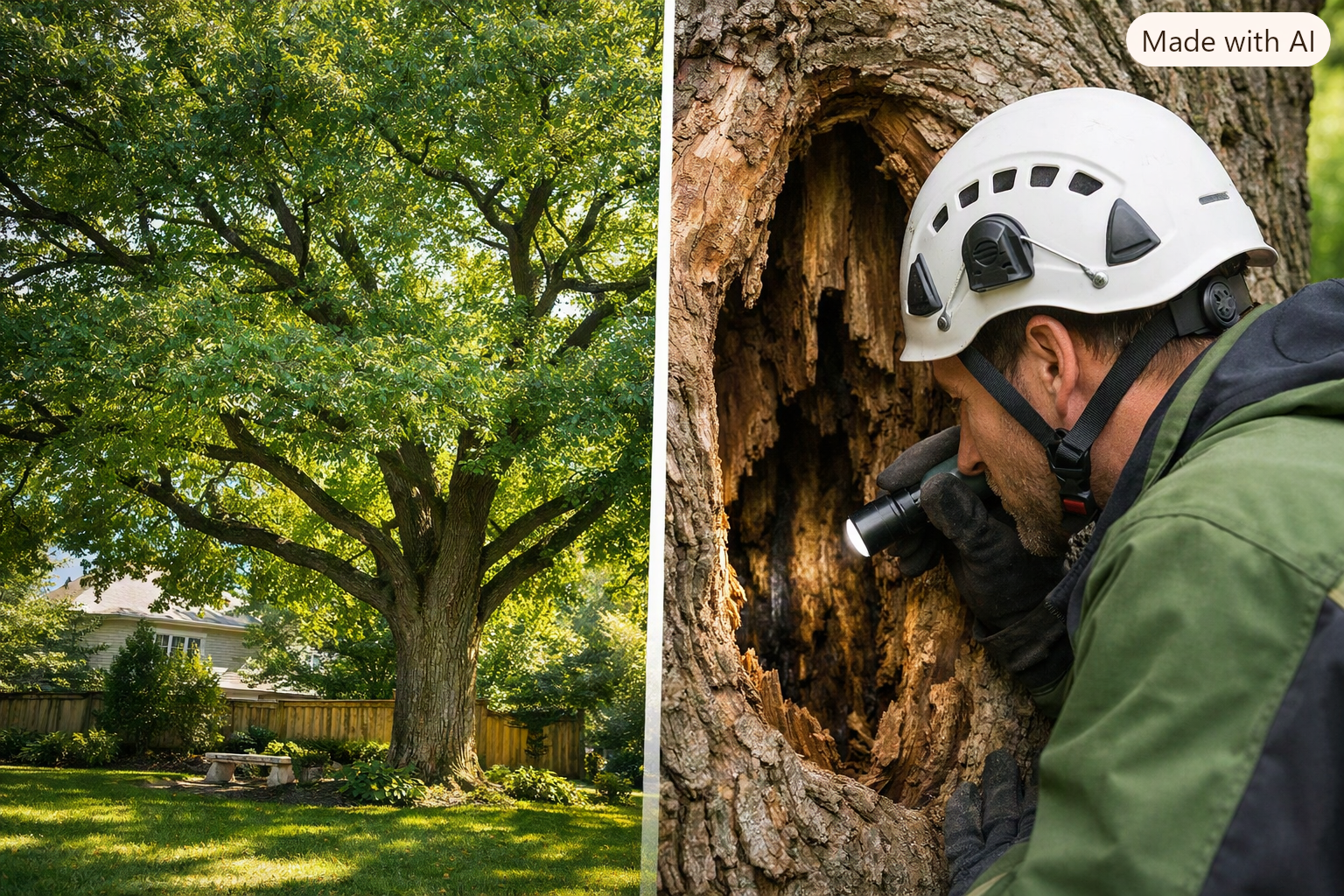
🕳️ Hollows and Cavities: Hidden Structural Weakness
A tree can often appear healthy externally while suffering significant internal decay.
Cavities or hollows develop when fungi and decay organisms gradually consume interior wood. While some hollow trees remain stable for years, others lose critical structural integrity.
Potential Concerns Include:
• Reduced trunk strength
• Hidden decay spreading internally
• Increased breakage risk
• Compromised load-bearing capacity
Many homeowners underestimate the seriousness of cavities because the tree still produces leaves and appears vigorous. However, healthy foliage does not always indicate structural stability.
Professional assessment tools can help determine how much sound wood remains and whether remediation or removal is necessary.
🍄 Bracket Fungi: The Decay You Can See
One of the most obvious indicators of internal decay is the presence of bracket fungi, also known as conks.
These shelf-like mushrooms grow from trunks, root flares, or large branches and can signal advanced wood decomposition.
Common characteristics include:
• Shelf-shaped growths
• Hard woody texture
• Growth near wounds or cavities
• Recurring annual fruiting bodies
Bracket fungi often indicate that decay is already established inside the tree. Depending on the fungal species and location, structural failure potential may increase significantly.
If you notice mushrooms or fungal growth on your trees, it's important to schedule an inspection promptly.
⚠️ Dead Branches and Hanging Limbs
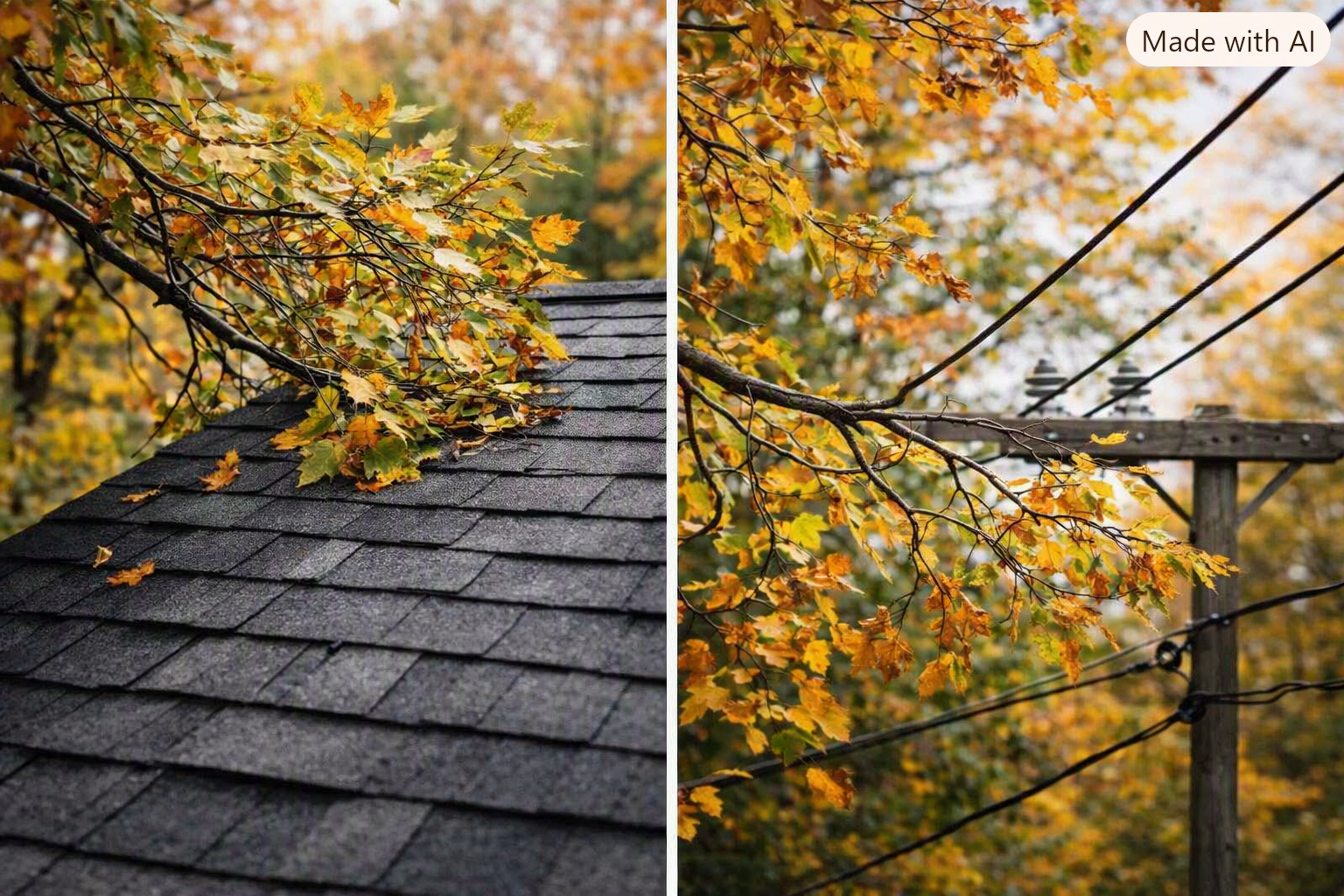
Winter storms frequently expose another common hazard: deadwood.
Dead branches become brittle and are especially vulnerable to snow loading and high winds.
Look for:
• Bare branches with no buds
• Missing bark
• Cracked or hanging limbs
• Large dead sections in the canopy
Even a small dead branch can cause damage when falling from significant heights, while larger limbs may threaten homes, vehicles, power lines, or pedestrian areas.
Pruning deadwood before winter helps reduce preventable risks.
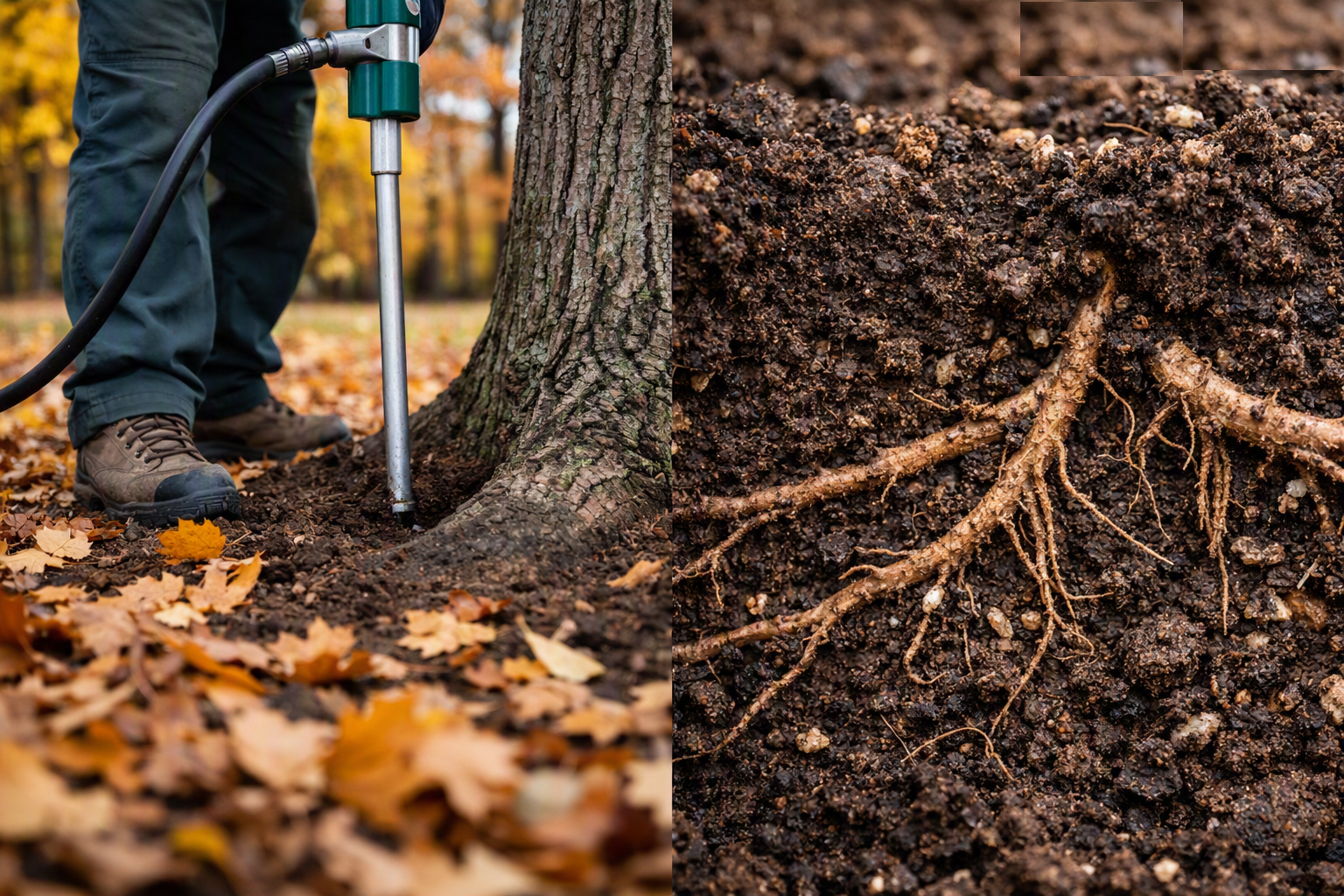
🌱 Root Problems Often Go Unnoticed
A tree's root system provides both nutrients and stability.
When roots become compromised through decay, compaction, excavation, or construction damage, the tree may become increasingly unstable.
Potential warning signs include:
• Leaning trees
• Soil heaving near the base
• Exposed roots
• Root flare decay
• Fungal growth around the root system
Winter soils combined with strong winds can increase the likelihood of root-related failures.
🔍 Why Professional Hazard Assessments Matter
Many structural defects remain hidden beneath bark or inside the trunk.
ISA-Certified Arborists are trained to assess:
• Structural defects
• Decay progression
• Branch attachment strength
• Root health
• Overall tree risk levels
Professional evaluations help determine whether a tree can be preserved safely through pruning and management or whether removal may be the safest option.
❄️ The Best Time for a Pre-Winter Tree Inspection
Late autumn is one of the ideal times for hazardous tree assessments.
Benefits include:
✅ Identifying defects before snowfall
✅ Addressing weak limbs proactively
✅ Reducing winter storm damage risks
✅ Avoiding emergency removal costs
✅ Protecting homes, vehicles, and family members
A proactive inspection today is often far less expensive than a winter emergency later.
Trust TreeSolve Inc. for Professional Tree Risk Assessments
At TreeSolve Inc., our ISA-Certified Arborists help homeowners throughout Winnipeg and surrounding communities identify hazardous trees before winter weather arrives.
Whether you're concerned about a trunk crack, hollow cavity, bracket fungi, leaning tree, or dead limbs, we can provide a professional assessment and practical recommendations tailored to your property's needs.
Don't wait until heavy snow reveals hidden structural problems.
👉 Contact us: https://www.treesolve.ca/contact-us
👉 Tree Removal: https://www.treesolve.ca/services/tree-removal
👉 Stump Grinding: https://www.treesolve.ca/services/stump-grinding
👉 Pruning/Trimming: https://www.treesolve.ca/services/pruning
👉 Tree Cabling: https://www.treesolve.ca/services/tree-cabling
👉 EAB Injections: https://www.treesolve.ca/services/emerald-ash-borer-injections
“TreeSolve Inc. provides ISA-Certified arborist services, large tree removals, trimming, and Emerald Ash Borer (EAB) treatments across Winnipeg,
MB
in neighborhoods
including the suburbs of Charleswood, River Heights, Tuxedo, Whyte Ridge, Linden Woods, Fort Richmond, Southdale, Island Lakes, Transcona, North Kildonan, West Kildonan, East Kildonan, etc., and surrounding communities: East St. Paul, West St. Paul, Headingley, Oak Bluff, and La Salle.
We are fully insured and WCB compliant.”